WELL BEING
What is your Fitness IQ?
DR. SHEELA NAMBIAR, M.D.
Do you know enough about fitness jargon and exercise protocol so that you don’t wind up hurting yourself. Try this quiz.
Want to get fit? Lose weight? Stay healthy? Well, how much do you know about fitness to keep you from injuring yourself or sabotaging your attempts at weight loss? Are you at the mercy of trainers, other fitness enthusiasts or alleged fitness experts?
It’s understandable that when you set out on your odyssey of health and self discovery, you may be at sea when confronted with fitness jargon, exercise protocols or savvy theories. Somewhere along the journey however, if you are serious about your fitness and more specifically your wellness, you will need to empower yourself with enough knowledge about the workings of your body in order to protect your own wellbeing.
Below are 12 simple questions you need to ask yourself to test your knowledge. Evaluate yourself against the correct answers to identify your Fitness IQ.
1. I need to stretch my muscles before every workout. True/ False
2. The best way to lose weight, and keep it off, is to go on a low calorie diet. True/ False.
3. To lose weight, I need to stop eating carbohydrates. True/ False
4. The best way to get a flat stomach is to do hundreds of abdominal exercises. True /False
5. The best time to exercise is:
a) In the morning
b) In the evening
c) Before lunch
d) Anytime
6. To get the benefit of a cardio workout you have to exercise continuously for:
a) 20 minutes
b) 30 minutes
c) 40 minutes
d) Any of the above
7. When you exercise and then stop, you tend to gain more weight because of the exercise- True/ False
8. I don’t need to exercise if I am of normal weight. True/ False
9. To lose one pound of fat I need to burn:
a) 500 calories
b) 1000 calories
c) 2000 calories
d) 3500 calories
10. Weight training will also help me burn fat. True/ False
11. Yoga and Pilates will help lengthen the muscles. True/ False
12. Massage, Sauna, Steam will help me lose fat. True/ false.
Answers:
1. False. You have to warm up the muscle first before attempting to stretch it. Stretching cold muscles can lead to injury
2. False. Going on an extremely low calorie diet leads to lowering of the Basal Metabolic Rate and is counter productive in the long haul. So although you may lose a lot of weight initially (besides losing your hair, your sense of humor, and ruining your skin), you will tend to gain it all back again (and more) once you get back to eating even near normally which you will eventually have to do. The best way to lose weight AND keep it off is to exercise and eat sensibly.
3. False. Eliminating one food group completely from your diet can lead to nutritional deficiencies. A balanced diet, (consuming about 500 calories less than your requirement/ day if you want to lose weight), inclusive of all the food groups is ideal to lose weight and stay healthy at the same time.
4. False. Doing hundreds of sit-ups does not result in a six pack unless the fat over the abdominal wall and inside the abdominal cavity is burnt by doing aerobic exercise. There is no such thing as ‘spot reduction’. You have to lose overall body fat percentage in order to see that flat stomach.
5. (d) Anytime is a good time to exercise provided you can exercise at that time. It is completely pointless to resolve to exercise early in the morning if you are unable to wake up early and need those extra forty winks. You are better off exercising pre-lunch or after work depending on your body clock. The only pre requisite is, don’t exercise on a full stomach. Wait at least 2-3 hours after a full meal and an hour after a snack.
6. (d) You can get the benefits of a cardio even if done in 20 minute intervals if you are unable to set aside one long stretch of time. The key is the total number of calories burnt and the intensity of the workout.
7. False. When you stop exercising, you stop burning those extra calories. In addition, you may also tend to get careless about your diet. The combination is what causes the weight gain not the exercise itself.
8. False. EVERYONE needs to exercise, irrespective of size, shape, color, creed or age. The human body was designed for locomotion and in the current highly industrialized and mechanical culture our requirement for mobility is greatly limited leading to various degenerative diseases. To counter this problem, one needs to set aside a period of time in the day to “exercise” in order to just ‘stay healthy’.
9. (d) To lose one pound of fat you need to burn 3500 calories. Although not an exact science, the balance of calorie expenditure and consumption ascertain weight loss and weight gain. If you burn 250 calories more than your basal metabolic rate everyday for one week, you will lose one pound of fat. It is advisable to restrict yourself to the loss of one to two pounds/week in order to be able to sustain that weight loss.
10. True. Weight training builds muscle. Increased muscle mass increases the Basal Metabolic Rate (or your body’s calorie requirement at rest), which leads to an increased calorie burn and therefore weight loss.
11. False. Yoga and Pilates will stretch the muscles, tendons and ligaments and make them more flexible. Muscles cannot be lengthened. Yoga and Pilates by design are modalities that improve flexibility and are excellent adjuncts to a well rounded fitness programme.
12. False. The only tried and tested way to lose fat is by eating less and burning more calories with exercise. It’s true that immediately following a sauna/steam your weight on the scale and even your statistics seem decreased. This is due to water loss from the body that is quickly replaced within the next 24 hours. Massage, steam and saunas are feel-good add-ons in a health club. Indulge if you must, but the real route to permanent weight loss is diligent exercise and sensible eating.
The writer is a Practising Obgyn, Fitness and Lifestyle Consultant, NAFC (USA) and Director, TFL Fitness Studio, Chennai. E-mail: drsheela@tflinc.net
Saturday, February 7, 2009


Fitness Instructor Becomes Unlikely Heart Attack Victim
WINSTON-SALEM, N.C. - When 57-year-old fitness instructor Paula Hickle woke up in a cold sweat, unable to breathe, she knew that something had gone terribly wrong.
Hickle had taught Pilates classes for years and received constant praise from her doctors for her great physical condition.
"(My doctor) said to me, 'Paula you are so healthy. You'll never die of a heart attack or stroke,'" Hickle said.
But in the middle of the night last year, all of that changed.
"My head just exploded," she said. "It felt like fireworks went off and woke me up. I could hardly breathe and both of my arms were numb and tingly."
Hinkle said her husband rushed her to the hospital where she was told that she had had a heart attack.
While her family has a history of heart disease and she has low HDL cholesterol levels, according to Hickle, the doctors who treated her that night said they won't ever be able explain exactly why this happened to her.
Hinkle said that she thinks it was her constant exercise that kept her strong enough to survive the heart attack.
Today, she is continuing to teach Pilates classes and has begun eating better to make sure that she doesn't become a victim again.
Heart disease is the number one killer of women and Hickle said she wants to encourage women to learn everything they can to protect themselves, even if they think it can't happen to them.
BY ALLYSON BOND,
Hickle had taught Pilates classes for years and received constant praise from her doctors for her great physical condition.
"(My doctor) said to me, 'Paula you are so healthy. You'll never die of a heart attack or stroke,'" Hickle said.
But in the middle of the night last year, all of that changed.
"My head just exploded," she said. "It felt like fireworks went off and woke me up. I could hardly breathe and both of my arms were numb and tingly."
Hinkle said her husband rushed her to the hospital where she was told that she had had a heart attack.
While her family has a history of heart disease and she has low HDL cholesterol levels, according to Hickle, the doctors who treated her that night said they won't ever be able explain exactly why this happened to her.
Hinkle said that she thinks it was her constant exercise that kept her strong enough to survive the heart attack.
Today, she is continuing to teach Pilates classes and has begun eating better to make sure that she doesn't become a victim again.
Heart disease is the number one killer of women and Hickle said she wants to encourage women to learn everything they can to protect themselves, even if they think it can't happen to them.
BY ALLYSON BOND,
Thursday, December 25, 2008
China wrestles with growing obesity
 By Calum MacLeod, USA TODAY
TIANJIN, China — Alonzo Bland is spending the holiday season at a Chinese fat farm. The Green Bay, Wis., resident will miss his family, but otherwise he's not complaining.
"It's a little drastic to come to China," admits Bland, 33, a self-confessed couch potato and devourer of KFC food. "But drastic is what I needed, at 646 pounds."
That was Bland's weight when his China adventure began in May, after winning a contest by China Connection, a firm that promotes traditional Chinese medicine.
The prize: a year at China's top weight-loss center, the Aimin (Love the People) Fat Reduction Hospital.
The private hospital treats an increasing number of Americans and other foreigners. But its real customer base, served by 18 clinics nationwide, is domestic — and growing. The once-slim Chinese nation, kept thin by poverty and communist policies in the 20th century, is now on the fast track to a U.S.-style obesity crisis.
About 30% of all Chinese adults are overweight or obese, says Chen Chunming, a nutritional expert at China's Center for Disease Control and Prevention, part of the Ministry of Health. "We don't need to keep doing new surveys. We know the problem is severe and getting worse," she says.
Public campaigns to fight China's expanding weight problem are hindered by the nation's newfound prosperity. "If you tell people not to eat hamburgers or other high-calorie foods, they say, 'I've got money now, I'll eat what I want,' " Chen says.
China's heavyweights still lag behind the USA, where two out of three people are overweight or obese, but China "is on course to be exactly like the U.S. in 10 or 20 years," says James Hill, director of the Center for Human Nutrition at the University of Colorado Health Sciences Center in Denver.
"No country has been able to stop things from getting worse. The causes of obesity are the same in China as in the USA. You have an environment where there are many foodstuffs available and no need for physical activity," he says.
Sworn off 'the Colonel'
The causes of Chinese obesity aren't hard to miss. Tianjin, a city of 10 million south of Beijing, increasingly resembles cities in the West — and so do its people. Next to the Communist Party's School of Socialism is the bustling Buy Now computer warehouse and a McDonald's and KFC.
Despite the temptation of American fast food, Bland says he has sworn off "visiting the Colonel" for fried chicken. He does splurge on computer games inside Buy Now, whose success highlights China's increasingly sedentary lifestyle.
"He was the biggest person I have ever seen," recalls computer games salesman Qin Tao, 24, about the first time he saw Bland in June. "He has definitely lost weight since then. I want to lose weight myself, but I have no time," says Qin, who weighs 265 pounds. "I need to make changes in my life. I know many health problems can arise from excess weight."
Diabetes caused by obesity "is much worse in China now than five years ago," says Guo Xirong, a scientist researching the issue at Nanjing Medical University. "I am optimistic we can help obese people avoid diabetes, but we have not yet found very efficient ways," Guo says.
One approach is making China's schoolchildren exercise at least an hour a day. Far more must be done, says Barry Popkin, a professor of nutrition and director of the Obesity Center at the University of North Carolina-Chapel Hill, who authored a July study about China's growing obesity.
"The Chinese government is not taking this crisis as seriously as (it) should be," he says. "They have not thought through how debilitating the huge proportion of people with diabetes and hypertension will be on the next generation."
He says 6 million to 10 million adult Chinese become obese each year. "China must start prevention now, or fall into the same trap as the U.S. and Europe — spending on drugs to treat, instead of prevent, obesity," he says.
Acupuncture and weight loss
Jacky Zhang, 35, who works at a Beijing technology company, admits he was nervous the first time he tried acupuncture at the Orient Mingren Fat Reduction Center, a chain with outlets in the Chinese capital and other cities. He desperately wants to slim down from his 243 pounds.
"I began to gain weight in my late 20s. At that time I got married (and) no longer pay attention to my shape," he laughs. "I eat whatever I want and sit all day long because of my work."
Two weeks of acupuncture have persuaded him to persevere. "I hope it can work," he says.
An estimated 38% of U.S. adults now use some form of alternative medicine, according to a U.S. government survey published last week.
Some weight specialists remain skeptical. "I am not aware of any good science that shows acupuncture makes a big difference" to help weight loss, Colorado's Hill says.
Bland, the American here to lose weight, has shed 250 pounds so far and wants to return home at 220 — a shadow of his former self.
He admits he was nervous about acupuncture. "I am not a fan of needles," he says. "But the first time I had acupuncture it was amazing. He credits the treatment with giving him energy for daily workouts.
"Traditional Chinese medicine can help people burn fat, suppress their appetite and increase the rate of metabolism," his doctor, Su Zhixin, says.
Bland's weight-loss quest has made him a local celebrity, attracting crowds when he goes for walks, but the staring is less now.
"I hope somebody sees my story and gets inspired, whether they have as much weight to lose as I had, or just 20 or 30 pounds," Bland says. "We've got to get them off their couches and moving."
Thursday, December 4, 2008
Your Body's Amazing Filtration System

by Karl J West CL, DCE,
(NaturalNews) Our aim should be to understand all of the most pertinent laws of nature and the fascinating forces that are working together to make life possible. Then we should desire to facilitate the forces that work to maintain life as we know it in accordance with those same laws of nature. When we attempt to facilitate natural laws, and we seek to understand and then to work with those laws it is an expression of our faith in nature (or God). The most critical services for renewal of the essential conditions required for healthy cellular function are performed by the bloodstream and the lymphatic system. It is an elementary realization that all degenerative diseases share a diminished capacity of both of these systems to do what only they can do. Each of them involves some level of interference with the role of blood and lymph.
Everything is a process. We know that the basic life process of every healthy cell is virtually identical regardless of what part of the body they constitute. The same basic laws apply to virtually every cell in your body. At the cellular level, the same forces are at work regardless what part of the body you are talking about. If the life process is virtually identical, the healing process for the tissues and organs that those cells comprise is also virtually identical.
If for some reason a part of the body is not maintaining a proper state of regeneration and performing its duties (functioning correctly) the logical thing to do would be to resolve the most critical dilemmas and instigate a regenerative process. In order to try that approach in a way that compliments nature we first need to understand how to facilitate and perhaps stimulate the basic life process. It stands to reason that if the basic life process can be instigated the healing process can also be instigated.
What is the lymphatic system? In a nut shell, the bloodstream acts as the cell environment and ideally the lymphatic system prevents much debris from getting in the way and slowly drowning and poisoning the tissue. Once enough of the tissues become acidic then the vital organs gradually begin to lose their ability to maintain optimal blood. It is your body`s amazing filtration system! Aquarium lovers know that without a filter to constantly renew the quality of the water for the fish, the fish would die swimming in their own acidic, toxic excrement. Now think about many trillions of cells packed tight and close together and every single one of them requiring groceries and waste management services. That presents quite a demand that only approximately 90,000 miles of blood capillaries and an estimated 180,000 to 300,000 miles of lymphatic vessels can fulfill! To our many trillions of cells this is the equivalent comparable to fishes in a fish tank with the most amazing filtration system conceivable. The subject is: simple, basic "groceries and waste management services" for the cells.
Without exception, all diseases share at least some common denominators. In the case of degenerative disease the cell environment becomes degenerative and then the cells degenerate. Since every organism is subject to its environment a negatively impacted internal milieu leads to negatively impacted cells. This means that all degenerative diseases involve ecological dilemmas. This means the name of the degenerative disease hardly tells us more than what part of the body is suffering. Even infectious diseases are not entirely without relation when it comes to the process of degeneration at the cellular level and even genetic diseases involve a degenerative process of the conditions in which the cells live. It is precisely these types of fundamentals that are the most ignored and neglected subjects in the field of medicine.
In the early seventies Dr. C. Samuel West DN, ND, Chemist & Lymphologist became the first person in the world to lecture publicly on the lymphatic system and blood proteins. His main source of research was a combination of the work done by doctors H. S. Mayerson, Arthur C. Guyton, Cecil K. Drinker, Otto H. Warburg, and other scientists from around the world. Since his approach centered around his pre-med background in bio-chemistry this would prove to be an ideal combination. What is very important to understand is that conventional sources of the form of Lymphology that he taught are still non-existent today. The form of Lymphology Dr. West taught is for self-healing. It is not for the practitioner alone, but mainly for the empowerment of all individuals. However, that term is not entirely descriptive of the science that Dr. West taught so in 2005 his son Karl came to realize that the science his father taught is more aptly titled as Cellular Ecology.
Dr. West often said, "Lymphatic vessels parallel your blood vessels everywhere they go. In fact, they are far more extensive." Everywhere you have blood you must have either lymphatic vessels or channels running side by side because the blood leaks its contents. Simply put, the lymphatic system works like a vacuum to remove everything that gets in between your cells so the blood-stream can continue bathing, feeding and oxygenating every cell in your body as efficiently as possible. Every ounce of fluid in the bloodstream is estimated to travel from the bloodstream, to the cells, and back again a staggering eighty times per minute! This adds up to a whopping 240,000 ml per minute in health!
What greater emphasis on the role of the bloodstream can you get? It literally acts as the cell environment because ideally there is nothing but a void, a vacuous state, where there is no excess fluid being held in the crevices throughout the tissues. This is only possible due to the way that the lymphatic system vacuums everything out and pulls the cells tight and close together, next to the bloodstream. It is that dynamic exchange with circulatory fluids that needs to be restored before a complete regeneration of tissue is possible. Therefore, when the filtration system is backed up circulation becomes impaired and it is at that time that activation of the lymphatic system becomes so important.
Dr. West always taught the why before the how. In other words, he emphasized the scientific basis behind his techniques before he taught people how to do them. He is famous for his theory of Interstitial Lymphatic Occlusion or Trapped Plasma Proteins as the prime cause of all degenerative disease. He was driven by his desire to teach his patients how to heal themselves and so he developed a powerful self help healing technique that 99.9 % of the people can do for themselves called "The Art of Lymphasizing".
What is lymphasizing and how do we activate our lymphatic system?
Lymphasizing is a way of activating the entire lymphatic system dynamically whereas it normally functions quite subtly. It is based in part on some of the ways the lymphatic system is activated by little things that we do everyday. It incorporates bio-electric methods, because Dr. West understood how the circulation throughout the entire vascular tree was made possible due to electrical properties in the blood plasma etc. So most of his techniques are designed with the benefit of a bio-electrical and anatomical perspective of the forces that make life possible in the first place, or in other words; how the body functions and heals itself.
Deep breathing was discovered to be the central propulsion of the entire lymphatic system as a whole by the late Dr. Jack Shields of Santa Barbara, CA. Therefore, yawning is likely at least partially an autonomic response. It was Dr. Zelikovski from Israel who proved that rebounding activated the ultra vast lymphatic vessels. Every time we stretch, flex, and relax our muscles, we activate the lymphatic vessels/pumps. Therefore, every time we walk, jump, run, or swim to the point of deep breathing we activate our system as a whole and the vessels throughout the body.
Certain "Speed-Healing" techniques Dr. West taught are especially unique due to the way they are able to move lymphatics by energetically freeing up the fluids. A favorite is a light, fast stroke (effleurage) based primarily on generating and utilizing bio-electrical properties throughout the overall tissues for the disassociation of trapped plasma proteins etc.
Conventional lymphatic drainage is practitioner oriented. In other words, it is designed to empower the practitioner. It stems from the instruction given by Dr. Emil Vodder and these began by placing a lot of anatomical force on the lymphatic check valves. This can damage them and does little to disassociate the overall extra-cellular fluids.
An example of how understanding the scientific basis behind the techniques pays off is that we begin to get into discoveries that reveal a science to exercise because the secret is not to believe in the "No pain - no gain" slogan. Exercise is a stimulus that provides instruction for stem cells, programs muscles and bones to strengthen but if it is taken too far (like running too far "out of breath") it can cause unnecessary harm. This means that people are inadvertently negating much of the benefits they would otherwise obtain by not cooling down and warming up properly and that if we will listen and respond to the needs of our bodies sufficiently we can get more out of our daily exercise routine.
With this in mind we can understand why Bioterrain Exercise (B.E.) is a proper approach to exercising (terms coined by Karl J. West). The following is a very short summary of how to apply Bioterrain Exercise by Prof. West:
"The goal of Bioterrain Exercising is to maintain a state of abundant oxygenation and alkalinity while at the same time you gradually push yourself towards ample triggering of a strengthening response for the bones, muscles, ligaments, as well as the entire vascular tree. The first phase is called the Positive Stress Mode of "B.E." and it entails placing your body under a certain degree of strain; only that which is required to help initiate deep breathing. The second phase is called the Lymphatic Fitness Mode and this is when you back off of the strain so to ensure that the lymphatic system is able to compensate for all the particulates that have filtered from the bloodstream into the spaces between the cells and you wait until you "catch your breath". Each time you "catch your breath" you can push yourself once more to the point of deep breathing. Once you have done both the first and second phases, you simply repeat them over and over again; however, in the first phase, instead of waiting until your body demands deep breathing it is a good idea to begin breathing in advance to prevent a build up of too much lactic acid etc. Remember; each time you are in the Lymphatic Fitness Mode wait until you are "in breath" again. By exercising in this manner you reduce the risk of damaging the tissues, or vessels and over time the lymphatic terminals and blood capillaries both become better prepared to deal with the demands of heavy physical exertion. Always remember though; that pain is a sign of oxygen deficiency, lactic acid, acidity and more importantly of tissue damage. If you follow these techniques properly you end up with more energy than you had when you started."
Moving on, we need to understand that the plasma portion of the blood consists mainly of blood proteins, sodium and magnetically attracted water molecules. Albumin, the tiniest and most abundant plasma protein is mainly what holds the sodium and therefore also the water in the bloodstream. Under normal circumstances the plasma portion of the blood filters, and escapes from the blood capillaries into the spaces in between the cells. It is the magnetic attraction to water than enables these particulates to form tiny streams flowing in between the cells towards the lymphatic terminals. Once these particulates are outside of the capillaries they immediately constitute the extra-cellular fluid and cannot be reabsorbed by the returning blood flow called the veins. Therefore, this form of filtration constitutes a literal separation from the bloodstream that would be permanent were it not for the lymphatic system.
In review, the fluids of the vascular tree go from being blood plasma to extra-cellular fluid, where ideally it will become lymphatic fluid, will then be purified, and finally returned back to the bloodstream once again. The cycle must continue as long as we are alive…What makes the lymphatic system so vital is that only the lymphatic system can remove extra-cellular fluid from the spaces around the cells. So ideally the extra-cellular fluid becomes lymphatic fluid where it will be purified and dumped back into the bloodstream where it ultimately belongs. However, things are not always ideal…
As a result of stress (negative emotions), shock, poison, injury, or heavy physical exertion the blood plasma constituents can escape the bloodstream more rapidly than usual. This is often marked by a dry mouth, thirst, and loss of energy. It is at this time that compensating by activating the lymphatic system and even working directly with the lymphatic vessels throughout the body more dynamically becomes extremely important.
To understand how life is made possible at the cellular level there are a few questions that people should begin asking themselves: What are the optimal conditions for cells? What alters these conditions most rapidly or commonly? What can we do to maintain or renew the optimal conditions for the cells? It helps to fully understand the blood-lymph relationship in order to sufficiently answer those questions!
For Dr. C. Samuel West, the cause of degenerative disease had to be something that directly interfered with the basic life process. This explains why he was so impressed by matters of circulation. This also means that for anything to fit into his map of things he would have to understand how it impacted the cellular respiration or i.e. the simultaneous generation of "POWER" as he put it. In his words, "Every cell generates power that enables each organ, each gland, and each part of the body to function properly." It is amazing to realize that each of the most vital qualities produced by the cell is produced simultaneously as part of the first law of life at the cellular level; that of cellular respiration.
Each healthy cell produces a field of electrons that end up coating the external surface of its entire membrane. This field is the likely reason living tissue and likewise healthy cells have the amazing ability to negate decay or free radical pathology. All electrons have the same negative charge and therefore create "mother nature`s rubber baby buggy bumpers" or in scientific terms; zeta-potential. It is this "slipping plane" that is all that prevents the entire circulation throughout the entire vascular tree from seizing up in just a moment.
The primary source of "energy" is the fuel for what Dr. West called the sodium-potassium pump (soon after entitled in Guyton`s Textbook of Medical Physiology) and he referred to "the pumps in every cell" as a kind of hydro-electric generator of "power" for our bodies to function properly. His prerequisite education in bio-chemistry was the drawing board he used to piece together every other of the most significant discoveries he would find from then on. It is for this reason that the form of lymphology he developed has so more to teach than massage. So in 2005, his son Karl began declaring that it is the foundation of Cellular Ecology.
Prof. Karl J. West has long stated that the study of the lymphatic system is focused primarily on matters of circulation and filtration. He realized of course that most people are already aware of the value of eating right, good nutritional supplementation and detoxifying their body. In 2003, he simply began using short titles (as in a course of study) for those principles: 1) Assimilation and 2) Excretion/Elimination. More emphasis may be needed on the fact that circulation is critical because oxygen is critical, and therefore the blood-lymph relationship is critical for the continued renewal of the conditions in which cells live; yet when we add more understanding with regard to the relationship between the life process and cell environment we will naturally want to address that of assimilation and excretion etc.
Therefore in 2005, Prof. West aptly identified the following: 1) Assimilation, 2) Circulation 3) Filtration and 4) Excretion/Elimination as "the Prime Ecological Variables" and coined these terms for a new asset of the missing discipline of Cellular Ecology. These constitute the "bulls-eye" for the most significant goal of true health care modalities. In the case of any disease, each and every one of those variables needs to be acknowledged and any dilemmas pertaining to them need to be resolved. For example, burdens of assimilation or "body burdens" directly affect the bloodstream, every vital organ that maintains homeostasis, and the immune system etc.; requiring excretion/elimination. For another example, impaired filtration equals impaired circulation over time etc. These are just examples of how we can address each variable in a similar fashion.
Once Prof. West announced the identification of the Prime Ecological Variables on the International Academy of Lymphology`s online discussion forum a friend of his called his attention to a similar type of Antoine BéChamp`s own variables that he had presented to his scientific peers nearly two-hundred years prior. They are: 1) Digestion, 2) Assimilation, 2) Dis-assimilation and 4) Excretion. (Circulation and Filtration was missing but it`s amazingly similar). Karl then began to learn just some of the history involving BéChamp vs. Pasteur.
As the story goes, Antoine had discovered all that Louis would later be credited for, because Pasteur was barely more than a plagiarist, according to those who have researched the subject by visiting the French academies - namely Ethyl Hume (for one).
Through BéChamp`s highly impressive career he had proven the cell environment as the ultimate determinant for the most prevailing form of organism. He had discovered that we have either aerobic or anaerobic life forms depending on the breeding ground or "terrain", and that these organisms would become either beneficial or virulent depending on a number of different types of environmental stimuli i.e. in particular the acid/alkaline conditions. In other words, he discovered what common sense should tell us; the fact that there is an ideal breeding ground for aerobes and conversely there is a breeding ground only suitable for anaerobes.
We can be sure there have been many great scientists since his time that have proven in one way or another that surviving in an abundantly oxygenated internal milieu requires metabolic efficiency for every cell therein. We can identify the concepts that become quite obvious as a result of BéChamp`s theories as pertaining to cellular ecology.
Due to the feud between Louis and Antoine it seems likely that Antoine lacked a degree of collaboration with Claude Bernard and others with whom Claude was associated with in their day. There were some European counterparts that had been discovering (exploring) the Lymphatic System at that time. After all, it was Claude who stated:
"The living organism does not really exist in the milieu exterior…but in the liquid milieu interior formed by the circulating organic liquid which surrounds and bathes all the tissue elements; this is the lymph or plasma…which is diffused through the tissues and forms the ensemble of the intercellular liquids and is the basis of all local nutrition and the common factor of all elementary exchanges."
This indicates that there must have been some international collaboration with regard to the lymphatic research of their day. Though surely even Claude Bernard lacked the kind of insight that was gained in the thirties and sixties and the benefit of the blood protein research we have today. Thanks to Ethyl Hume it is getting to be a very popular quote of Pasteur that on his death-bed Louis finally admitted, "Claude Bernard was right; the terrain is everything!" Louis was indirectly admitting that Antoine was right, but such an admission must have been difficult due to the fact that they had been bitter enemies for many years.
A doctor of cellular ecology will always first seek to understand the most critical extra-cellular dilemmas, and then consider what is needed to maintain and renew the optimum conditions of which the organisms are subject.
Why not declare that the father of Cellular Ecology is Antoine BéChamp? Records prove he was a far more accomplished scientist than Pasteur and the real genius of his time. Louis Pasteur ("the father of modern medicine") succeeded in promoting mainly the cytolitic approach for "curing" disease and much of what has resulted/transpired since is arrogance against nature (or God). He was not nearly the scientist (or man of faith) that BéChamp was but unfortunately he successfully passed himself off as the first to disprove "spontaneous generation". According to Ethyl Hume, author of BéChamp vs. Pasteur, there is ample evidence to show that Pasteur only stole this credit that belonged to Antoine BéChamp.
At an awards ceremony intended to honor Pasteur, BéChamp showed up with the intention of exposing Louis as a fraud. Once Louis noticed him in the audience he succeeded in humiliating Antoine after referring to all those who still believed in the theory of spontaneous generation as fools, because he then accused BéChamp of being one of those that still believed in that embarrassing theory. Antoine was outraged and came to his feet in the middle of the audience and issued a challenge similar to the following: "Sir, I challenge you to prove that you had prior claim of disproving spontaneous generation!" As the story goes, all that Pasteur had to do was turn his back and walk off the stage. The news papers referred to Antoine as an old fool who dared challenge the genius of Pasteur.
The truth is Pasteur may not even have understood BéChamp`s true beliefs related to the way organisms that are normally quite beneficial have a tendency to adapt by changing into virulent forms when the "bio-terrain" becomes degenerative. This is called the Theory of Pleomorphism and in our day Dr. Robert Young (and perhaps others) have videotaped the phenomena using his microscopes and film equipment, "I have seen this change under the microscope take place with red blood cells transforming into bacteria, then yeast and finally mold, in a compromised acidic environment."
At the time when Pasteur succeeded in "pulling the rug out from under" BéChamp many were attempting to profit by the sale of various biologicals and serums. There is little doubt that nearly all of those products were completely worthless. Yet when modality is the God of industry science just gets in the way. Pasteur helped to ensure that anything having to do with cellular ecology would be trampled upon by the pharmaceutical industry to a great extent over the next 200 years.
The erroneous assumption that the immune system or that genetic determinism is entirely to blame stems from a terrific hole in the germ theory model that was created when those that stood to benefit managed to bury the remainder of BéChamp`s illustrious work. It is admittedly the mindset of Pasteurian Allopathic Medicine that is responsible for the status quo or ruling consensus of our day, so we might even begin referring to this period as the Pasteurian Medical Dark Ages.
What other mindset or paradigm would be superior?
How about a mindset that results from understanding the following: The simple fact that every living organism is subject to its environment; that if the environment becomes degenerative, the cells may also degenerate; that if the environment is continually renewed, for any number of living cells those cells may benefit from such renewal. It is logical to conclude that any degradation of the conditions necessary for healthy cellular function produces a breeding ground for organisms that are designed to break down dead flesh. How about a paradigm that is devoid of arrogance and competition against nature (or God)? How about beginning with the most significant; common denominators, and working our way out from there?
These facts may prompt us to wonder; how many hours, days, weeks, months, or years out of the lives for each great scientist throughout history, equally deserving of a Nobel Prize, was spent researching at least some aspect of cellular ecology? Is it so easy for mere servants of our monopolistic, oppressive medical system to ignore matters of such importance in the interest of protecting their phony careers?
Since practically every college on earth would go broke if they could not promise profitable careers in exchange for all the usual tuition fees, we could continue to end up with a lot of people burying their heads in the sand if not for our ability to reason with them. The divinity within each of us compels us to share the truth regardless of the consequences mainly once we come to understand and trust the truth.
Are only the most profitable modalities suitable to fuel "a fascist industrial complex"?
It is getting to be a well recognized fact that the greatest innovations come from outside the system. The problem is that so many people lack the courage or the means to stand outside the consensus and challenge the status quo and this is not good for science. It is apparent that it is a rare person in America who can even question "authority" due to what could be called "misplaced parental syndrome", because the government is viewed as a guardian by so many. In this regard many would warn us to leave their security blankets alone. Therefore, the science of Cellular Ecology will likely remain a missing discipline without a hearty grass roots movement placing emphasis on educating the general public in regards to these and many more related matters.
The inability for today`s medical practitioners to think primarily in terms of pro-biotics, pro-nature, or pro-cell-life mainly stems from the simple fact that there is more money to be made in "death care" than in health care; a conclusion we are finding more and more evidence to support these days. Therefore many have felt the need to identify the psycho-social-economic equation that puts us all at risk: we are talking about the simple fact that most investors` typically only care about whether they made a profit or not when they wake up in the morning. When love is in the equation (brothers and sisters) we shouldn`t fear; however, it has become far too apparent that love is not in that equation. Therefore any realization that the acidic, anoxic, anaerobic milieu is a breeding ground resulting in repeated infection seems to continually escape those that dictate changes in medical protocol. How blockages (of circulation or conductivity) occur, how toxins accumulate, and what can be done to eliminate them throughout the body is not given adequate consideration.
How do you enable the body to heal itself? Here is a rhyme to sum it all up, "All you got to do is renew the milieu!" It means, "Renew the conditions for the cells". That is how you enable the basic life process. It`s finding the intended original operation of the body to be the solution to degenerative disease. What a novel approach (sarcasm intended)!
The response of organisms with regard to various stimuli they receive is viewed uniquely as a doctor of cellular ecology. The paradigm that would have resulted from BéChamp would have required a consideration to the bioterrain as the ultimate determinant and would have resulted in a far more accurate characterization of disease. He would have lead the world into prevention, reversal and elimination of disease rather than pinning our collective hopes on fictional magic bullet cures that can never manifest in any period of time, as we have and continue to be promised by those that are profiting from medical research for reasons that are only obvious to a cellular ecologist. Is there any intelligence in acting upon the body regardless of the true circumstances surrounding its demise?
As for the reasons that people donate to those that are supposed to be seeking the answers without ever asking how that money will be used, without asking for any accountability, that is another matter regarding sociological phenomenon of epic proportions.
Can we "cure" a naturally occurring condition? One could soundly proclaim there is no cure for natural death. However, it also stands to reason that to the extent a disease is degenerative that there is much we can do in relieving pain by resolving the ecological dilemma`s (for example by eliminating blockages and inflammation) thereby effectually reversing the death process to a degree so that regeneration occurs faster than degeneration for a period of time. Can`t we prevent, reverse and eliminate at least that much?
If we get into studying colloidal biology or the electro-magnetic terrain that enables particulates to slip freely through thousands of miles of capillaries every minute and for plasma particulates to slip freely though an even greater distance of lymphatic channels and interstitial spaces etc we find the most significant area of study with regard to "curing" disease there could ever be. You want "Star Trek" like healing? That is what is in store for us when we break free of the bonds of conventional thought and dare to step outside of the consensus on issues that really matter.
Remember that there is a tremendous tendency for conventional thought to be ruled by industry instead of science, especially when a corporate-government mass-media mind-manipulation agenda is parading about. The incredibly vast droves of "sheeples" are too easily fooled into thinking that "authority figures" must not be questioned for us to waste too much time discussing the matter with them. After all, who doesn`t enjoy a good pair of "rose-colored glasses"? Yet if you are like many of the other readers of these highly informative newsletters, and you have become equally afflicted with an insatiable appetite for truth that lays "outside the box", you have no doubt been labeled "a radical" and we are on the same team. The good news is that we can be far more grounded in our "radical" thinking and proven to be even more rational than the average "sheeple". A solid foundation and a wise perspective is our rod of iron. Take heart, for the truth will eventually surface and the light thereof will shine forth in all its glory.
It is important for everyone to understand that the science of Lymphology taught by Dr. C. Samuel West has been used as a catalyst for the rebounding industry, and various other products that are good for promoting lymphatic function since the seventies. It did not come from formal colleges or universities but from a growing number of dedicated individuals since he began his lecturing in 256 cities per year for seven-teen years, during the mid seventies.
As a bio-chemist, Dr. West was very focused on the life process and its relationship to the cell environment. So this places him into the same category as others like Antoine BéChamp, Otto Warburg, Gaston Naessens, Gunther Enderlein, Alexis Carrel, and a great many great others (see Cellular Ecology Hall of Fame founded by K. West). Until going on four years ago the title of Lymphology was the best anyone had proposed for this science. Now that Prof. Karl J. West has more aptly identified the science that his father taught we realize that Lymphology is the foundation of Cellular Ecology.
Still there is more that needs characterization and inclusion before we can do justice to the science of how the body heals itself. Much of what happens to provide instructions or to "program" bone, muscle (or tissue) to strengthen, and much of what beckons stem cells, or initiates the scavenging action of the immune system has to do with various stimuli that calls for certain programming within the cells. It is the Cellular Programming. If we integrate the variables pertaining to that subject we find ourselves placed alongside the likes of Dr. Robert Becker author of The Body Electric and Dr Richard Gerber author of Vibrational Medicine and another great many great others.
In lymphology we find a door to the future; a future that "a great many great others" have only imagined and we have yet to see materialized. Lymphology is mainly the beginning, the rock solid timeless foundation of an even more sophisticated approach; that of cellular ecology. It provides a scientific basis for most every healing art in the world (including those that seek to utilize the power of the mind). Lymphology is to a cellular ecologist what basic math was to Einstein. It is long over due, but institutional nonetheless. It has been since the creation; even since we were tied to our mother`s blood and lymphatic systems through our umbilical cord while in the womb, and yet it is still waiting with infinite patience to emerge from obscurity.
Cellular ecology remains largely in the future. It is an elegant, elaborate, and highly sophisticated science that results in even more self empowerment continuing over an entire lifetime of learning and progression. There is no end to our process of learning in sight, but we can say with absolute certainty that the primary goal of modern medicine should be to "renew the internal milieu" when it comes to any degenerative disease. Do the researchers who are spending billions of our dollars every year even know this? Everyone who is truly advancing the field of health care will be involved in some way or another with either of the variables pertaining to that process.
Is it possible that we may clearly delineate more appropriate protocol for inpatient hospital care in general, once we identify enough of the processes and principles involved in how the body functions and heals itself? Can we revolutionize the industry of hospital care to the point that we free ourselves of medical experimentation and more? Will the drug industry ever be properly restrained? We may start with the following terms: 1) Cellular Ecology & 2) Cellular Programming/Instruction. Together they constitute a new science called Bioterrainology (also coined by Prof. Karl J. West).
Only time will tell whether the gradual education and awakening of the general public, and continuing discoveries of vital importance in the field of natural healing will provide enough motive for the ruling majority to finally revolutionize the field of health care and public health education. For now, we may continue following in the footsteps of "a great many great others" in honor of nature (or God). Some of us will continue to stand upon the shoulders of genius` past and present in pursuit of beneficial health care revolution with what may prove to be the most essential approach to health care ever defined: the newly emerging science of Bioterrainology....
Flexible Fitness: The foot bone's connected to the back bone

By Tara Orton and Nicole Tomasino
GateHouse News Service
Posted Nov 10, 2008 @ 08:28 PM
--------------------------------------------------------------------------------
Remember that childhood tune, "the foot bone's connected to the leg bone, the leg bone's connected to the knee bone"?
This is true, particularly when it comes to injuries in the leg. Each bone in the human body is connected to another, creating a chain from the bones of the foot all the way up to the top of your head. An injury occurring in one part of the body - such as knee pain, hip pain or even low back pain - can be caused by an abnormality in another part of the body, especially the foot.
How can the foot be tied to all of these injuries? The foot is the base of the body, bearing its entire weight. It is intricate, with many bones, muscles and tendons that must work together when the foot comes in contact with the ground. Forces through the foot when walking are 1.2 times the body weight, forces when running are 2.5 times, and when jumping they are five times the body weight. Its position, or alignment, naturally influences the alignment and angles of all the bones, muscles and joints further up the chain. If this alignment is less than ideal, it can lead to pain or injury anywhere in the body.
The purpose of the foot is to absorb shock by having a certain amount of flexibility, and to propel the body forward by "locking" to create a rigid lever for push-off. It is when the foot exhibits excessive flexibility as in overpronators or excessive rigidity as in oversupinators that problems tend to arise.
Overpronators tend to roll excessively inward, with a characteristically low or flat arch. This foot is excessively flexible and does not lock efficiently for push off. Plantar fasciitis, or pain along the heel and bottom of the foot, is common due to the repeated overstretching of this tissue each time the foot hits the ground. Often, knees that are angled inward toward each other, a position that can contribute to problems throughout the body, accompany overpronation.
In contrast, oversupinators tend to walk more on the outside border of the foot, and are overly rigid. This type of foot does not absorb shock well because it is unable to unlock and pronate appropriately while walking. Oversupinators typically have medium to high arches, often walk with the feet rotated slightly outward, and may step loudly due to poor shock absorption.
"Pump bumps," boney bumps on the back of the heel, are also common. This rigidity can also result in fractures to the bones of the foot, shin splints, knee pain and low back pain.
The first line of defense for treating the problem foot is footwear. Wearing an athletic shoe with the appropriate level of support or cushion for your foot type is essential. For other footwear, consider how much support it gives. Flat, thin dress shoes, high heels, flip flops, and very flat boots will not provide the support needed for the pronator, and may flare up associated injuries.
If footwear alone does not solve the problem, then a custom orthotic is often helpful. Research has shown that custom orthotics can have a positive effect for several of the previously mentioned injuries.
The orthotic is typically constructed after an extensive evaluation of the foot, and the feet are casted to capture their exact structure. This improved foot-positioning helps to reduce the stress on the surrounding structures, relieving symptoms and improving overall body alignment.
The foot is indeed connected to the whole body.
Thursday, July 5, 2007
Stress: a philosophical approach

We often read about stress in work and family life. We are aware of its physical and psychological dangers. There are many products, procedures and services advertised to help relieve it. But do we actually know what stress is and what causes it? By examining personal beliefs and value systems we can get to the heart of the matter and better manage stress.
Stress appears to have at least two broad dimensions: external and internal. The external dimension relates to our environment, for example, the events in our life, lifestyle demands and other people. The internal dimension relates to how we perceive such events, our goals and belief systems. It is in this area that I believe a philosophical approach can be helpful. Stress can have positive as well as negative effects. It can motivate us to get out of bed in the morning as well as make and meet goals. It can help us rise to challenges and be successful in work, sport or recreation.
Its negative effects, however, occur when we cannot, or perceive that we cannot, cope with it. Physical and psychological breakdown can occur. Physical symptoms include migraines, shoulder, neck and back pain, heartburn, diarrhea, constipation asthma and allergies. It can also lead to sleep disorders, autoimmune disease, chronic pain, cardiovascular disease and chronic fatigue. Psychologically, it can cause forgetfulness, indecisiveness, hopelessness, anxiety, and depression. Behavior can also be affected with increased drinking and smoking, obsessive compulsiveness and memory lapse, according to Australian government and commercial sources at http://www.betterhealth.vic.gov.au and http://www.mydr.com.au.
How we relate to stress internally can be affected by our physical condition, whether it is sickness (e.g. viral infection), fatigue or degree of fitness. Psychologically, it can be affected by our self-esteem, problem-solving abilities, attitudes and goals. Philosophically, it relates to our value and belief systems. While the physical and psychological aspects of stress have been tirelessly written about, these philosophical aspects have been largely ignored. People seem more concerned with treating the symptoms than the problem, which may be more philosophical in nature.
Identifying and managing philosophical aspects of stress
Everyone has values and beliefs. Some people value money and assets, others getting drunk on Friday nights. Some value environmental concerns over economic interests, others showing success with expensive cars and houses. These personal values are mixed with our religious and cultural beliefs and contribute to our behavior. Yet, how many of us have actually examined our value system? When it comes to managing stress, whether we passively acquire it from society, life experiences, culture, all the above or somewhere else is not as important as being aware of our value system. This is because negative consequences of stress can occur when we behave counter to it.
For example, a person who values time with the family may have little chance to do so because he or she works 10- to 14-hour days. While someone else may see this as an opportunity to provide more money for his or her children's education, it may be a source of stress for that person. Internally, both react differently based on their value systems. So, examining our value and belief systems, or philosophy of life, can give us insights into internal sources of stress - and be a good starting point for managing them. An important element of stress management is to confront these philosophical issues. I recommend a three-step process:
- The first step is to examine your value system. Study your behavior and ask yourself the following questions: Why did I do that? What should I do in similar situations? What do I value more or less? In effect you are asking yourself, "Who am I?"
- The second step is to dream. Find a quiet place and time then identify your ideal lifestyle. This begs other important questions: How should I live? How much of my dream lifestyle would really contribute to my happiness, as judged by my own criteria? Am I ignoring other more important values?
- The third step is problem solving. Identify the problem, brainstorm ideas, evaluate the pros and cons of each idea then select the best solution. Next, act and evaluate. If need be, start from the first stage again.
These three steps should be continuous throughout one's life. To achieve one's dream could take decades, if attained at all. But you may attain satisfaction knowing you have started your journey - you are starting to be and act the way you believe you should.
Although not scientifically tested, I believe that by acting more inline with examined values people can change their behavior in a way that brings physical and psychological benefits. They may become more relaxed, decreasing muscle tension, migraines and chronic pain. Diet and physical activity levels may also improve, leading to better weight control. Sleep patterns can improve and fatigue alleviated as well as dependency on drugs - legal and illegal. This can decrease risk factors for cancer and other health problems.
If you are not willing to take this path then I suggest you follow the physical and psychological methods of coping with stress. But please don't ignore - or worse, accept - your stressful situation.
thxs japan fitness
http://www.fitnessjp.com
Monday, July 2, 2007
Pilates: A Fitness Tool That Transcends the Ages
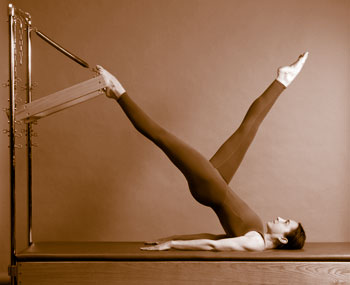
Someone somewhere once said: "age is no excuse for weakness."
I believe that is true.
As millions of Baby Boomers and beyond enter their golden years, they hope to be active, and stay healthy and injury-free. However, the greatest challenge in doing so for many has been and will be a sedentary lifestyle.
Many older adults have the perception that they cannot exercise for fear of injury, when just the opposite is true. A body will respond to proper training regardless of age. Unfortunately, many older adults fail to realize that someone who does not exercise is potentially more prone to injury and poor health.
WHAT HAPPENS AS WE GET OLDER?
Balance, agility, proprioception, and kinesthetic awareness all start to diminish as we age or become sedentary. We use vision, the vestibular system and the complex of nerve endings in our muscles, joints and tendons to keep ourselves upright. As we get older or become sedentary, these sensory systems operate less effectively.
Additionally, the muscular system starts to weaken from the core to extremities as we get older. Our core (consisting of the abdominal wall, back, and pelvic musculature) becomes weak with progressive weakening of the hip and shoulder stabilizers. Loss of flexibility also impairs our ability to move properly and hold good postural alignment. As a result, many older adults experience orthopedic injuries such as hip and shoulder fractures from falls due to loss of balance, and to overuse-repetitive stress injuries.
Our skills for focus and memory retention also diminish as we age. Osteopenia and osteoporosis can complicate exercise programs, limiting some forms of training. Arthritic and degenerative changes, high blood pressure, pelvic floor dysfunction, and many others can be added to the list.
Many therapists are turning to Pilates as a method of rehabilitation and training for older adults experiencing these aging-related challenges.
WHY PILATES?
Pilates is effective because it is an extremely flexible rehabilitation system. Exercises can be modified based on each client's needs to best facilitate a positive movement experience. The exercises can be assistive in nature or, as a client gets stronger, modifications can be made to make the exercises more challenging. The training is low impact and weight bearing, and positional restrictions can be accommodated.
Pilates starts with nine principles of training that make it a perfect therapeutic remedy for this population:
- Breathing—the essential link between the mind and body, relaxes, improves focus.
- Concentration—paying attention to movement quality.
- Control—optimizing form and technique.
- Centering—moving from a stable, balanced and flexible core.
- Precision—greater efficiency in movement patterns.
- Balanced muscle development—postural and muscular symmetry.
- Rhythm and Flow—smooth flowing movement.
- Whole Body Movement—integrating movement through the mind, body and spirit.
- Relaxation—using just the effort needed to accomplish a task, and releasing tension.
Through Pilates an older adult can achieve a strong core, integrating stabilizing muscles, and creating a strong, balanced foundation from which to move. Pilates enables them to better react to their environments.
CONDITIONS TO CONSIDER
As is the case when working with any specialized population, you will need to be aware of certain cautions when using Pilates with older adults. For example:
- Osteoporosis—Many Pilates exercises incorporate flexion-oriented movement. For osteoporosis sufferers, flexion is contraindicated. We recommend clients at risk of osteoporosis get a bone density scan to find out their T-score. A T-score of -1 to -2.5 indicates osteopenia, or 10-25% below normal bone density. Caution is required when moving into flexed postures. A T-score of >2.5 indicates osteoporosis and all flexion of the spine is contraindicated. The beauty of Pilates is that modifications can be made to meet the needs of people afflicted with osteoporosis. (See case study)
- Arthritis and Degenerative Conditions—By the time we reach middle age and above, most of us have some level of arthritic or degenerative changes in the joints of our extremities and spine. As with any form of exercise, appropriate precautions need to be observed. The low impact, controlled environment of Pilates training is ideal for managing and improving mobility and strength.
- High Blood Pressure—One of the principles of Pilates is breath work. Breathing can reduce anxiety, focus attention and lower blood pressure during exercise. For people with high blood pressure or an ailment like glaucoma, breath work incorporated into Pilates is very important to make sure they are not spiking their blood pressure.
THE RIGHT EQUIPMENT
 |
| Exercise balls and foam rollers can be incorporated into a modified, at-home Pilates regimen. |
Pilates equipment includes: the reformer, trapeze table, chair, barrels and small apparatus, such as circles and the Pilates mini-balls.
For an older client population, the trapeze table and clinical reformer are ideal due to the ease of getting on/off the equipment, and to the variety of exercises one can perform on each piece. This versatility is a key benefit; you can make more efficient use of your time instead of having to move older clients from one piece of equipment to another.
Mat Pilates is a great form of exercise for home programs. You can incorporate the principles of Pilates and modify the exercises using foam rollers and exercise balls for home programs.
CASE STUDY: TREATING OSTEOPOROSIS
Client "A" is a 5 foot, 7 inch, 120-pound, 67-year-old female. She was diagnosed with "established" osteoporosis 3 years ago with a T-score of -2.2 of the lumbar spine and -3.2 at the femoral neck. She initially had a single leg standing balance of <>
She started Pilates training three times per week and began using the medication recommended by her physician. After 1 year, her T-scores were -1.3 at the lumbar spine and -2.4 at the femoral neck. In addition, her diagnosis has changed from osteoporosis to osteopenia. Her balance has improved to allow single leg standing >90-seconds while doing standing Pilates exercises including single heel raises. The fracture risk for the client has gone from high to moderate, and her fall risk from high to low.
Rob Kopitzke, PT, MPI, USACC, NMR, is the president of Body Concepts Inc, a Pilates-based physical therapy clinic in El Dorado Hills, Calif. Kopitzke has extensive training in biomechanics of the foot and lower extremities. Two long-term manual therapy courses on the spine and a variety of other orthopedic-sports medicine courses round out his physical therapy training.
Types of Pilates Equipment Found in Therapeutic Clinics
THE REFORMER
The Reformer is the most well-known piece of Pilates equipment, providing an effective, low impact resistance-based workout that is friendly to the joints. It consists of a gliding carriage inside a wooden or metal frame connected to a system of springs, pulleys and ropes. Users sit, kneel, stand, or lie on the carriage and push and pull the footbar and the ropes. Resistance is provided by the attached springs. Reformer exercises target every part of the body.
TRAPEZE TABLE (OR, THE CADILLAC)
The Cadillac is a raised horizontal table-top surrounded by a four-poster frame, on which various bars, straps, springs and levers are fixed. A tremendous variety of exercises can be performed on the Cadillac—from gentle spring-assisted sit-ups to advanced acrobatics while hanging from the upper bars. Resistance is provided behind, in front, and above at a variety of different angles.
THE REFORMER/TRAPEZE COMBINATION
This piece of equipment combines the Reformer and the Trapeze Table. The Reformer is hidden underneath two, removable tabletop mats, and greatly increases the amount of exercises that can be done. Another variation—the Reformer/Trapeze combination resembles a standard Reformer, with a half wall of Cadillac features on one end.
FITNESS CHAIRS
Pilates fitness chairs activate the legs, buttocks, shoulder girdle, arms and core, as well as heightens neuromuscular coordination. Pilates fitness chairs (or combo chairs) resemble a stool with single or split steps at the bottom. Handles, chair backs, rotational discs, and other accessories can be added for increased variety.
Although many exercises are performed sitting on the chair and pressing down on the steps or pedals, many more can be performed lying on the floor, standing up, or lunging forward.
MAGIC CIRCLES
This is a circular ring made of sprung steel or flexible plastic, with contoured handles. Circles are available in a range of resistance tensions (from band level 2 to 4) and diameters (12 inches to 14 inches) to meet the needs of different body sizes and ability levels. They can be used standing, sitting or lying down on your front, back or side. Magic circles are a simple way to add resistance training to mat exercises.
THE LADDER BARREL
This consists of ladder-like rungs and a rounded barrel-like surface on which a multitude of stretching, strengthening and flexibility exercises can be performed. The barrel is separated from the ladder by a sliding base that can adjust to accommodate different torso sizes and leg lengths in a range of Pilates exercises.
Thursday, June 21, 2007
Beware of Trendy Health Food – it May Not be Your Best Bet

Here is Part 1 of Gina Laverde article that tells you the inside scoop on trendy food.
I am very inspired by our generation’s growing concern for health. We continue to test the norm, and find the answers that work best for us. But, BEWARE – as soon as people like us start thinking, corporations tend to jump on the bandwagon. Now that health is a trend – there’s so much opportunity to make a buck.
What can be cooler than yogurt these days? Companies that used to sell these creamy treats as a low-fat alternative to ice-cream are now claiming that this stuff actually boosts your immune system and controls your weight?
The idea behind the scenes is the pro-biotic. Pro-biotics are amazing little organisms that already live in your gut. They help ward off infection and balance out any bad bacteria and viruses. The word pro-biotic actually means pro-life. So, yeah – they are good.
But, what the yogurt companies do not reveal is that most of their “live and active cultures” are actually dead. And furthermore, the rest can easily die in your stomach acid as they make way to their destination. And even furthermore, since the sale of raw dairy is MOSTLY illegal in the U.S. – all commercial dairy has been homogenized and/or pasteurized. This process kills the natural enzymes and bacteria that live in the milk, and turns them into histamines. Have you heard of these guys? Histamines cause allergic reactions.
So, if the yogurt cultures were actually “alive” and the dairy “raw” the enzymes would act to assist in your digestion of the dairy, make it into your gut and flourish.
Before you spend your money and test your health on any pro-biotic you should know that many of the pills (like acidophilus) that are sold commercially contain mostly dead organisms as well. It’s very hard for a pro-biotic to make it passed your stomach. Some of these products claim to have seven billion or 30 billion per capsule – but, what you’d like is for a claim of how “alive” they are. The box should also contain info on how the bacteria are preserved (i.e. freeze-dried).
Pro-biotic foods, which have been used for centuries may be a better way of re-introducing that healthy bacteria into your system. Health food stores in my area can’t keep enough Kombucha Tea in stock. This fermented tea is actually very potent because it is able to sneak passed your digestive acids and settle in your gut.
Because of their potency, Kombucha and other raw pro-biotic foods may cause detox or die-off symptoms. In essence this is a good thing, but moderation is key. The Kombucha bottle recommends one bottle a day to keep healthy. When your body releases toxins, it can mimic illness – so drinking a whole bottle on your first taste can be really painful.
I encourage you to make all of your health decisions conscious ones – weigh all sides and introduce new remedies in moderation. Some books that offer a well-rounded view of the benefits of pro-biotics, and the truth behind them are: The Body Ecology Diet, by Donna Gates; and Nourishing Traditions, by, Sally Fallon. Both also have websites.
Brain Fitness
Little Miss Brain gives her two cents on how to keep your brain young and fit!
… and I promise it’s almost nothing like the boot camp in Full Metal Jacket.
A new study concluded a training program focusing on improving thinking and concentration can improve mental acuity. The study primarily focused on attention training in older adults who have a harder time blocking out distractions due to how the brain changes with age.
“In the one-on-one sessions, subjects are asked to ignore distracting information and tasks get harder as the eight-week training progresses. For the group sessions, participants learn new information relevant to healthy aging and are tested on their ability to apply the new information. All participants had an fMRI scan while they completed a task that required them to look for target words or numbers while ignoring distracting sounds. The scans showed brain activity in areas related to both sight and sound. Follow-up fMRIs showed that in the group receiving the one-on-one training, activity related to sight was increased, while activity related to sound was decreased. In addition, performance on the task was improved.”
Essentially this “brain training” is a powerful statement regarding how much control we have over how our brains function. Interesting. And for those of us who might not fit into the “older adult” category?
“There are a growing number of activities, from crossword puzzles to Sudoku, promoted as ways to keep our minds young,” said Jennifer Mozolic, a
Too bad I hate Sudoku.
Get Your Kids off the Couch This Summer & Out In the Sun!
Filed under: Fitness, General Health, Healthy Habits, Healthy Kids With school out and your young kids at home, they've got a lot of extra time on their hands. The mere mention of fitness and taking them away from the TV or their favorite video games can often evoke reactions usually reserved for doing chores, getting haircuts, or visiting the dentist.
To make fitness less tedious for everyone, print physical games and actual exercises on strips of paper, color-coding to distinguish the games from the exercises. On 'fitness day', once or twice a week, have everyone draw and complete an exercise or play a game -- this works best with 3 to 8 year olds. Cheer each other on while completing each exercise and at the end, make them show their muscles. I don't know a kid yet that doesn't love to show them off.
Fun Tip: Get a polaroid camera and take instant photos to post on the fridge of their accomplishments and you'll soon see them excited about 'fitness day'.
thxs Tanya Ryno
With school out and your young kids at home, they've got a lot of extra time on their hands. The mere mention of fitness and taking them away from the TV or their favorite video games can often evoke reactions usually reserved for doing chores, getting haircuts, or visiting the dentist.To make fitness less tedious for everyone, print physical games and actual exercises on strips of paper, color-coding to distinguish the games from the exercises. On 'fitness day', once or twice a week, have everyone draw and complete an exercise or play a game -- this works best with 3 to 8 year olds. Cheer each other on while completing each exercise and at the end, make them show their muscles. I don't know a kid yet that doesn't love to show them off.
Fun Tip: Get a polaroid camera and take instant photos to post on the fridge of their accomplishments and you'll soon see them excited about 'fitness day'.
thxs Tanya Ryno
Thursday, June 7, 2007
Your Batteries - re-energize during the workout
Re-energizing your dead batteries will help you put fatigue to rest for good.A little effort and a positive attitude will perk you up in a flash. These simple energizing tips will give you new life.
1. Eat properly. Nutritious meals are number one in the battle against fatigue.Make sure to eat high-protein foods, such as meat, cheese, eggs and whole-grain breads with each meal. Munch on fruit when you need a snack. Avoid too much caffeine.You may want to try perking yourself up with a high potency vitamin B complex, Fifty mg. Of B15 with each meal is said to help.Cayenne pepper is another natural stimulant. You can mix a teaspoon in hot water or take it in capsule form.
2. Get your proper rest. If you are not getting enough at night, take a break and nap during the day. Or perhaps before you head out at night if youre a late night partygoer.
3. Keep in shape with exercise. A good daily walk will get those tired muscles moving.
4. Meditate. Any form of meditation can be a real, natural healer. Just sit quietly, breathe deeply, and let your mind forget your daily hassles. Think of pleasant things.Above all, you can fight fatigue best by keeping a positive mental attitude. Try the tips mentioned, and pamper yourself; take a break when you need it.
Three Things Every Exercise Program Should Have

1. What you should know to design a safe and effective exercise programA complete fitness program must include aerobic exercise, muscular strength and endurance conditioning, and flexibility exercise. Aerobic exercise does good things for your cardiovascular system and is an important part of weight management. Muscular conditioning can improve strength and posture, reduce the risk of lower back injury, and is also an important component of a weight management program. Flexibility exercise is needed to maintain joint range of motion and reduce the risk of injury and muscle soreness.
2. Aerobic exercise can be as simple as walkingWalking is a weight-bearing aerobic exercise. So are jogging, rope skipping and dance-exercise. Aerobic exercise is any activity that uses large muscle groups in a continuous, rhythmic fashion for sustained periods of time. There are also non-weight-bearing aerobic exercises, such as bicycling, stationary cycling, swimming and rowing.
Keep the pace comfortable. A very important aspect of your exercise program is the intensity. You should exercise at a comfortable pace. You can measure your exercise heart rate to check the intensity of your exercising, or you can take the 'talk test.'
To measure your heart rate, take your pulse as soon as you stop exercising. Count your heartbeat for 10 seconds, then multiply that by six to convert it to a one-minute heart rate. If you keep your exercise heart rate within a range of 55 percent to 80 percent of an estimated maximum heart rate (220 minus your age), you're doing well.
The talk test is easier to accomplish. Just exercise at a pace that allows you to carry on a conversation while you're exercising.
How often should you exercise?Three to four days of aerobic activity is fine for general health maintenance. If you're trying to lose weight, aim for four or more days a week, being sure you take off at least one day a week.
How long should you exercise?Work up to 20 or more minutes per session for general health maintenance. For weight loss, gradually work up to 45 minutes or longer at low to moderate intensities in a low- or no-impact activity.
3. Strength conditioning gives you a choicePick calisthenics, free weights or machines. Just be sure that your strength training includes exercises for every major muscle group, including the muscles of the arms, chest, back, stomach, hips and legs.
Start with a weight that's comfortable to handle and keep it up for eight repetitions. Gradually add more repetitions until you can complete 12 repetitions. For greater strength conditioning, add more weight and/or more repetitions, in sets of eight to 12, when the exercise becomes easy.
Stretch for flexibilityProper stretching involves holding a mild stretch of 10 to 30 seconds while you breathe normally. Always warm up before you stretch. Like strength conditioning, flexibility exercises should include stretching for all the major muscle groups.
One last thing to remember . . . Always check with your doctor before beginning any exercise program, especially if you're over 40, or have cardiovascular risk factors, such as smoking, high blood pressure, high cholesterol, diabetes or a family history of heart disease.
Excercises for Men - Fast and Furious
No matter what kind of workout you do now, I can show you how to make it better. And all I need from you? An extra 5 minutes. Simply choose one of the bonus muscle builders that follow, and tack it on to the end of your current routine. It won't take long, and it'll yield great dividends, allowing you to customize your training to achieve almost any goal. Whether you want to build bigger arms, sculpt a rock-solid core, or eliminate back pain, it's just 5 minutes away.
Start today and you'll instantly improve your workout. Your body will soon follow.
Build Sleeve-Busting Arms
You can accomplish a lot in 5 minutes, and this arm-building routine is proof. To do this workout, simply pick any two exercises that target your arms: one for your biceps and another for your triceps. As an example, you might choose the EZ-curl-bar curl (biceps) and the dip (triceps). For either, select the heaviest weight that allows you to complete eight to 10 repetitions, and then alternate between the exercises, doing sets of five or six repetitions without resting. It's not uncommon to do four or five sets of each. And this means you'll be logging a total of eight to 10 sets of challenging arm work in just 5 minutes.
Perfect Your Posture
Sitting hunched over a keyboard for 10 hours a day trains your muscles and connective tissues to adapt to that position, adding a hunch to your posture. But you can unravel your slump with an exercise called the prone cobra, which helps counteract the damage of your daily grind.
How to do it: Lie facedown on the floor and rest your arms at your sides, palms down. Contract the muscles in your glutes and lower back to raise your upper torso and legs off the floor. At the same time, rotate your arms outward till your thumbs point toward the ceiling. Hold this position for 60 seconds, rest for 60 seconds, then repeat two more times, for a total of three sets.
Banish Back Pain
"Lower-back problems often stem from tight gluteal muscles," says Nate Green, a personal trainer in Whitefish, Montana. His solution: a foam roll ($23 at performbetter.com). "Your muscle tissue is like a rubber band. If it has a bunch of knots in it, you won't be able to stretch it very far," says Green. By using a foam roll to alleviate these knots, you'll make your muscles more pliable--and quickly relieve back pain.
How to do it: Sit on a foam roll on the floor, with your feet up and your hands on the floor for balance. Now slowly roll your butt over it, stopping on the tenderest spots (these are knots) for 20 to 30 seconds or until the pain subsides.
Pump Up Your Pecs
This workout is designed to trigger a growth spurt by maintaining tension on your chest muscles for a full 5 minutes. Make sure to use a timer---you'll need to know when to stop.
How to do it: Set an incline bench to a 30-degree angle and grab a pair of dumbbells, choosing the heaviest weights that allow you to complete 10 repetitions of the dumbbell incline fly (described below). You'll use this weight for both exercises 1 and 2. Do the moves in the order shown, following the step-by-step instructions for each.
Exercise 1: Dumbbell Incline Fly
Hold the weights above your chest, with your arms slightly bent. Without changing the bend in your elbows, lower the weights out to your sides. Reverse the motion to return to the start.
Do one set of eight reps.
Don't release the weights; hold them straight above your chest, and rest for 15 seconds in that position.
Do as many more repetitions as you can.
Rest for 15 seconds, then move on to exercise 2.
Exercise 2: Dumbbell Incline Bench Press
Hold the weights above your chest with your arms straight. Bend your elbows to lower the weights to the sides of your chest. Pause, then push the weights up.
Do as many repetitions as you can.
Rest for 15 seconds with the weights held above you.
Do as many more repetitions as you can.
Rest for 15 seconds, then set the weights down and move on to exercise 3.
Exercise 3: Wide-grip Pushup
Get into pushup position, but with your hands placed about twice shoulder-width apart.
Do as many pushups as you can.
Rest for 15 seconds and keep repeating until your 5 minutes are up.
Bench More, Save Your Shoulders
"One of the keys to both a bigger bench press and better shoulder health is the ability to stabilize your shoulder blades," says Bill Hartman, P.T., C.S.C.S., a physical therapist in Indianapolis. The reason: When you're able to squeeze your shoulder blades down and together--and hold them that way while you bench-press--you create a more stable surface from which to push the bar. This allows you to lift heavier weights while reducing the stress on your shoulder joints. Do the two exercises that follow in the order shown. Hold each movement for 10 seconds, rest for 10 seconds, then repeat until you can't maintain a 10-second hold. As you improve, increase your hold time.
Serratus Dip
How to do it: Grab the bars of a dip station and lift your body until your arms are completely straight. Without bending your elbows, press your shoulders down as you push your torso up. Hold, then relax your muscles, which will cause your torso to lower relative to your shoulders -- as if you were shrugging them.
Hanging Scapular Retraction
How to do it: Grab a pullup bar with an overhand grip, hands just beyond shoulder-width apart, and hang at arm's length. Without bending your elbows, squeeze your shoulder blades down and together. (Your body will rise slightly.) Hold, then rest by relaxing your muscles without letting go of the bar.
The 5-Minute Six-Pack
If you do only crunches, you're shortchanging your abs. Why? Because in addition to flexing your trunk -- as you do in a crunch -- your core muscles also allow you to flex your hips, rotate your body, and stabilize your spine. So for the best results, you need to target each of these functions. To hit them all in about 5 minutes, do one set of each exercise below in the order shown, with no rest between.
Plank
Assume a pushup position, but place your forearms on the floor. Brace your abs as if you were about to be punched in the gut, and hold for 30 seconds.
Plank
Assume a pushup position, but place your forearms on the floor. Brace your abs as if you were about to be punched in the gut, and hold for 30 seconds.
Side Plank
Lie on your left side and prop your upper body up on your left elbow and forearm. Then raise your hips until your body forms a straight line from shoulders to ankles. Brace your abs for 30 seconds. Then repeat on your right side.
Swiss-Ball Crunch
Lie on your back on a Swiss ball so that your hips and your lower and upper back rest on the ball. With your fingers placed behind your ears, raise your torso as high as you can by crunching your chest toward your hips, then return to the starting position. Do 15 reps.
Reverse Crunch
Lie on your back on the floor, with your knees slightly bent. Raise your knees to your chest by lifting your hips up and in. Lower your legs to the starting position. Do 15 repetitions.
Cable Woodchopper
With your right side toward the weight stack of a cable station, grab the rope handle of a high pulley with both hands. Pull the rope down and across your body until your hands are just outside your left knee. Reverse the move to return to the start. Do 15 reps, then face the opposite direction and do 15 more.
Reverse Cable Woodchopper
Now attach the rope handle to the low-pulley cable . Bend over and grab the rope with both hands, your arms nearly straight and just outside your right knee. Pull the rope up and across your body until your hands are in line with your left ear. Reverse the movement. Do 15 repetitions, then face the opposite direction and do 15 more.
Start today and you'll instantly improve your workout. Your body will soon follow.
Build Sleeve-Busting Arms
You can accomplish a lot in 5 minutes, and this arm-building routine is proof. To do this workout, simply pick any two exercises that target your arms: one for your biceps and another for your triceps. As an example, you might choose the EZ-curl-bar curl (biceps) and the dip (triceps). For either, select the heaviest weight that allows you to complete eight to 10 repetitions, and then alternate between the exercises, doing sets of five or six repetitions without resting. It's not uncommon to do four or five sets of each. And this means you'll be logging a total of eight to 10 sets of challenging arm work in just 5 minutes.
Perfect Your Posture
Sitting hunched over a keyboard for 10 hours a day trains your muscles and connective tissues to adapt to that position, adding a hunch to your posture. But you can unravel your slump with an exercise called the prone cobra, which helps counteract the damage of your daily grind.
How to do it: Lie facedown on the floor and rest your arms at your sides, palms down. Contract the muscles in your glutes and lower back to raise your upper torso and legs off the floor. At the same time, rotate your arms outward till your thumbs point toward the ceiling. Hold this position for 60 seconds, rest for 60 seconds, then repeat two more times, for a total of three sets.
Banish Back Pain
"Lower-back problems often stem from tight gluteal muscles," says Nate Green, a personal trainer in Whitefish, Montana. His solution: a foam roll ($23 at performbetter.com). "Your muscle tissue is like a rubber band. If it has a bunch of knots in it, you won't be able to stretch it very far," says Green. By using a foam roll to alleviate these knots, you'll make your muscles more pliable--and quickly relieve back pain.
How to do it: Sit on a foam roll on the floor, with your feet up and your hands on the floor for balance. Now slowly roll your butt over it, stopping on the tenderest spots (these are knots) for 20 to 30 seconds or until the pain subsides.
Pump Up Your Pecs
This workout is designed to trigger a growth spurt by maintaining tension on your chest muscles for a full 5 minutes. Make sure to use a timer---you'll need to know when to stop.
How to do it: Set an incline bench to a 30-degree angle and grab a pair of dumbbells, choosing the heaviest weights that allow you to complete 10 repetitions of the dumbbell incline fly (described below). You'll use this weight for both exercises 1 and 2. Do the moves in the order shown, following the step-by-step instructions for each.
Exercise 1: Dumbbell Incline Fly
Hold the weights above your chest, with your arms slightly bent. Without changing the bend in your elbows, lower the weights out to your sides. Reverse the motion to return to the start.
Do one set of eight reps.
Don't release the weights; hold them straight above your chest, and rest for 15 seconds in that position.
Do as many more repetitions as you can.
Rest for 15 seconds, then move on to exercise 2.
Exercise 2: Dumbbell Incline Bench Press
Hold the weights above your chest with your arms straight. Bend your elbows to lower the weights to the sides of your chest. Pause, then push the weights up.
Do as many repetitions as you can.
Rest for 15 seconds with the weights held above you.
Do as many more repetitions as you can.
Rest for 15 seconds, then set the weights down and move on to exercise 3.
Exercise 3: Wide-grip Pushup
Get into pushup position, but with your hands placed about twice shoulder-width apart.
Do as many pushups as you can.
Rest for 15 seconds and keep repeating until your 5 minutes are up.
Bench More, Save Your Shoulders
"One of the keys to both a bigger bench press and better shoulder health is the ability to stabilize your shoulder blades," says Bill Hartman, P.T., C.S.C.S., a physical therapist in Indianapolis. The reason: When you're able to squeeze your shoulder blades down and together--and hold them that way while you bench-press--you create a more stable surface from which to push the bar. This allows you to lift heavier weights while reducing the stress on your shoulder joints. Do the two exercises that follow in the order shown. Hold each movement for 10 seconds, rest for 10 seconds, then repeat until you can't maintain a 10-second hold. As you improve, increase your hold time.
Serratus Dip
How to do it: Grab the bars of a dip station and lift your body until your arms are completely straight. Without bending your elbows, press your shoulders down as you push your torso up. Hold, then relax your muscles, which will cause your torso to lower relative to your shoulders -- as if you were shrugging them.
Hanging Scapular Retraction
How to do it: Grab a pullup bar with an overhand grip, hands just beyond shoulder-width apart, and hang at arm's length. Without bending your elbows, squeeze your shoulder blades down and together. (Your body will rise slightly.) Hold, then rest by relaxing your muscles without letting go of the bar.
The 5-Minute Six-Pack
If you do only crunches, you're shortchanging your abs. Why? Because in addition to flexing your trunk -- as you do in a crunch -- your core muscles also allow you to flex your hips, rotate your body, and stabilize your spine. So for the best results, you need to target each of these functions. To hit them all in about 5 minutes, do one set of each exercise below in the order shown, with no rest between.
Plank
Assume a pushup position, but place your forearms on the floor. Brace your abs as if you were about to be punched in the gut, and hold for 30 seconds.
Plank
Assume a pushup position, but place your forearms on the floor. Brace your abs as if you were about to be punched in the gut, and hold for 30 seconds.
Side Plank
Lie on your left side and prop your upper body up on your left elbow and forearm. Then raise your hips until your body forms a straight line from shoulders to ankles. Brace your abs for 30 seconds. Then repeat on your right side.
Swiss-Ball Crunch
Lie on your back on a Swiss ball so that your hips and your lower and upper back rest on the ball. With your fingers placed behind your ears, raise your torso as high as you can by crunching your chest toward your hips, then return to the starting position. Do 15 reps.
Reverse Crunch
Lie on your back on the floor, with your knees slightly bent. Raise your knees to your chest by lifting your hips up and in. Lower your legs to the starting position. Do 15 repetitions.
Cable Woodchopper
With your right side toward the weight stack of a cable station, grab the rope handle of a high pulley with both hands. Pull the rope down and across your body until your hands are just outside your left knee. Reverse the move to return to the start. Do 15 reps, then face the opposite direction and do 15 more.
Reverse Cable Woodchopper
Now attach the rope handle to the low-pulley cable . Bend over and grab the rope with both hands, your arms nearly straight and just outside your right knee. Pull the rope up and across your body until your hands are in line with your left ear. Reverse the movement. Do 15 repetitions, then face the opposite direction and do 15 more.
Robert Allen Gives Some (Sound) Advice on getting Fit

Sex is a great way to start the day, as is any form of exercise. Unlike the former, which is by far one of the most invigorating ways to burn calories(on average, 30 minutes takes off toasted hot dog bun) most regular forms of exercise such as push-ups or other areas along those lines are generally seen as tedious, which makes them difficult to sustain for the long term while building repetition and muscle tone.
In my opinion, the reason why most would be healthy people fail in their quest is because of the too much too fast mentality, which is that initial drive people have of "alright, this is it, I'm going to do it for real this time! This easily fades for most of us and burn-out occurs which leads us back to that mediocrity which got us here in the first place. So, it's in the interest of promoting what I view as a positive approach to a long term goal that I would suggest a different approach, which is designed to help keep yourself or your friends and loved ones on a healthy track to success while not getting "burned-out" along the way.
In the beginning, you'll want to start out slowly at first, and when it starts to get boring or difficult, just quit for the day. Overtime a lengthy workout can be beneficial, but at first, I've discovered that it's very important never to put the concept of working out in a "tedious" category which can occur when someone tries to do too much too fast. So I'd say do whatever you must to keep in fun and when you're starting out, keep it short. If you can begin thinking of working out as a great part of your day, then who's to stop you from getting in shape and feeling much better over time?
For those really seeking a healthier way to live, a great deal of change can occur with food choices, whether you're on a budget or not. For those with a little more free cash on hand, try substituting Pomegranate juice for Coffee in the morning. At first, this may result in headaches(for the truly coffee addicted), but these headaches will only reinforce how dangerous caffeine is, and the energy you receive from the Pomegranate will greatly enhance your feeling of well-being(take it from a former caffeine addict). When I learned the reason why caffeine works, it turned me off from it right away. When caffeine enters the body, it reached the liver, which upon receiving stimulation, panics and sends endrophins to the brain which responds by working overtime and stimulating the body with excess energy as it reacts to a perceived "emergency" situation(from the New England Journal of Medicine, 2002). How is this healthy? Why is not more widely known I wondered. Well, coffee is a multi-billion dollar industry, and then you think about it, the answer is clear.
There are still many options for coffee lovers like us out there, though! For those on a budget, I would recommend trying De-caf and just making it a point to stick with it. As a singer, this was a professional choice I eventually just had to make as caffeine will dry out my throat. In a competitive city like LA, well I just can't afford to put myself in second place with all the talent out here. With the great taste of coffee and a good wake-up routine in place, I was gradually able to get by soley on this, with no need for caffeine(though I make it easier on myself with Hazelnut Creamer and sugar substitute). For those with weight loss tied to coffee in mind, choosing De-Caf over regular will still keep that laxative effect we all enjoy without damaging you liver or wrecking havoc on your nerves. Taking it slow it good advice, and I wouldn't endorse it if I didn't follow it myself.
Helping a parent or friend workout can be a bonding experience as well. Be polite about it though, and always be friendly. Never make the person you're attempting to help feel bad about their choices which put them in an unhealthy situation as it's very possible they're only excercising their own freedom of choice to live the sort of life they want to, which is fine. Actually, if this last part is true then it only makes getting in shape easier. While they are doing some light running, pushups or any other form of excercise, they're probably going to be easily disappointed as they're trying something completely different from their normal routine, and understandably so. Why then shouldn't we, the interested make every effort possible to surround them with however much we can that they, or we enjoy as they begin a courageous journey towards better health? Why not find out what their favorite music is and put in a cd or I-Pod for them, or buy them the best tasting/healthiest subsitute for something unhealthy that they adore which still contains as much of what they like as possible with the smallest amount of healthy ingredients? This will gradually ween someone away from an unhealthy lifestyle without going too far too fast which as most health experts would agree, is the #1 chief reason why diets and excercise aren't followed thoroughly over time. In the end though, your friend or family member will always be grateful for what you've done for them provided you do it love and respect, for anything like when handled incorrectly will make someone retreat from a positive situation and will reinforce the comfort which comes from a 'known' set of circumstances, such as junk food, tv, etc.
Just a few thoughts, because when I see people in Hollywood walking around on their third energy drinks just to have a normal levelling for their day or those who don't think they can eat healthy on a budget, well to be honest, it bothers me a lot because I can't help but care. Have you ever, for instance tried shopping for food at the Giant Dollar Store? Not only do they have a four pack of Chicken Breasts(highest protein with the least fat of any meat) for 1.70! In a regular store like Ralph's, Kroger's, Vons or Trader Joe's this would cost you a minimum of 7.00. It's true and it's important that people understand how simple it is. While canned fruit may not be the most healthy way to get your 5-6 servings a day, it's still better than fruit snacks, and a rate of 2 for 1.00 with each serving costing $00.25, well who would argue? Of couse, if money wasn't a problem I'd be among the first to hit Whole Foods, but that all comes later. The point is, I feel great, and it wasn't so hard to get here.
Little by little, day by day, I managed to turn myself from a half-pack a day smoker, frequent drinker, and someone who complained about never having enough time for exercise into a smoke free, extremely healthy occasional drinker of good wine(with all the money I've saved from non-smoking), and a daily exerciser and work-out enthusiast. I feel great and so can you but I didn't always and I had no understanding of why this was.
I've been able to accomplish better health by not taking on too much too soon and not making too big of a deal about it(as this will make one too aware of the difficulty of their goals), and not telling too many people what I what I was doing as I did it(for the same reason as before, and plus, praise can distract one from their goals). The point is this, you can do it, and there's no reason to believe you cannot. Just take it slow, have fun with it, and keep your mouth shut about your actions. After a week or two, when you think of the old ways, you may ask yourself why you would want to sabotage all the good work you've already done, and this may be all you need to stick with it full time. Keep it to yourself though, as nothing is more fun than just showing up somewhere people haven't seen you in a while and looking great better than you have in a long time. Trust me on this folks, I've been there. Other than that, be great to each other and have a fantastic day!
Make it Happen-
Robert-Allen
Subscribe to:
Posts (Atom)